

The Whispered Messages of The Nativity
How God Continues to Use the Nativity to Speak to Us

God did not announce the birth of His Son the way we might expect. There were no palace proclamations or royal decrees. Instead, God chose the unusual, fulfilling the truth that “the Lord does not look at the things people look at” (1 Samuel 16:7, NIV).
The Nativity itself became a sermon.
BARN - He began with a barn, a place meant for animals, not infants. Luke records that Mary “gave birth to her firstborn, a son… and placed him in a manger, because there was no guest room available for them” (Luke 2:7, NIV). The stable spoke to ordinary people everywhere: God is not intimidated by our mess. Heaven was willing to arrive in a place the world would overlook.
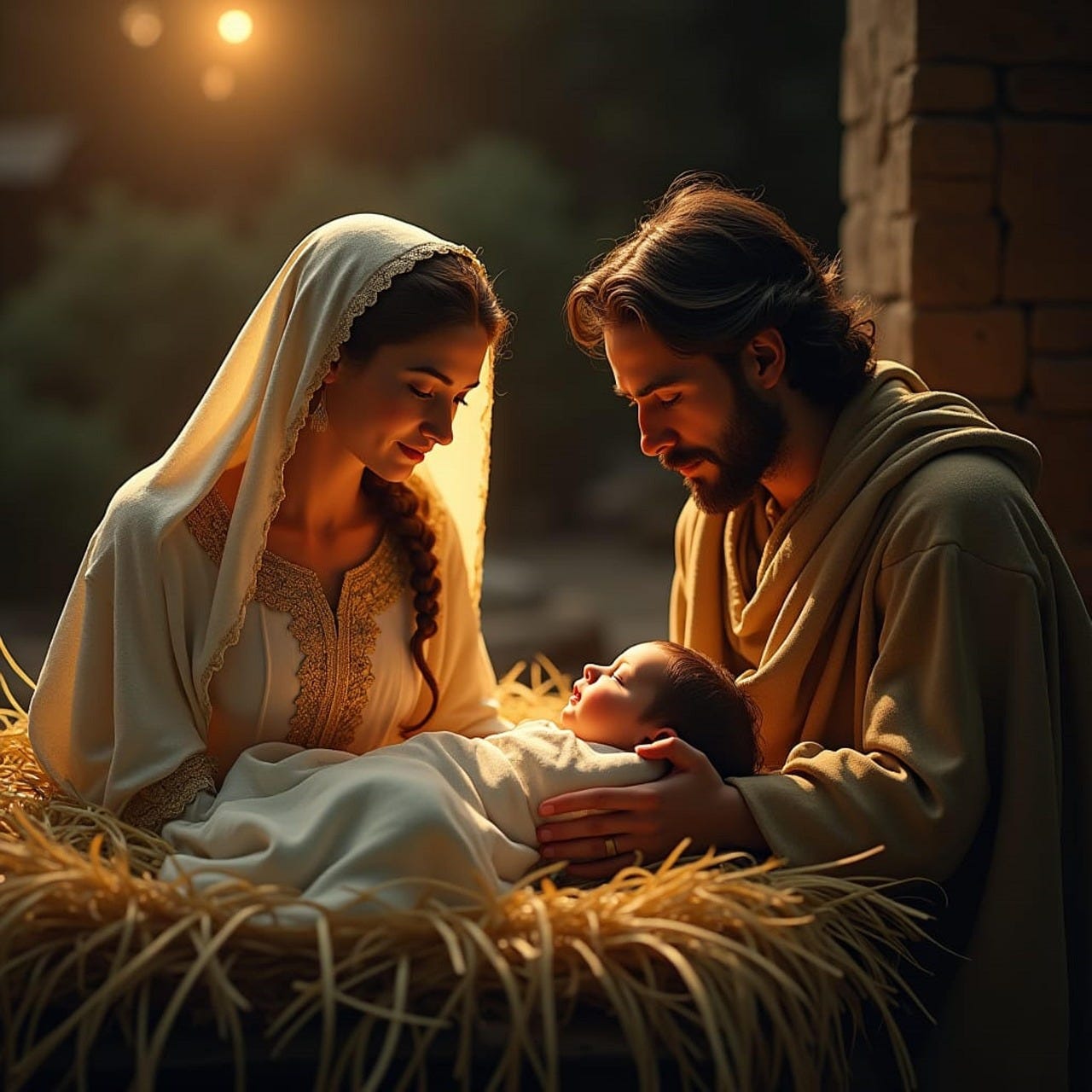
Image by Arnie Bragg from Pixabay
ANGELS - Then there were the angels, bursting into the darkness with glory. “Suddenly a great company of the heavenly host appeared with the angel, praising God” (Luke 2:13, NIV). They declared what human eyes could not yet see—that this child was Savior and Lord. God came humbly, yet His glory remained unmistakable.
MY FAVE DONKEY - Nearby stood the donkey, faithful, loyal, willing to carry weight, and unassuming. Scripture often associates donkeys with peaceful kingship rather than conquest: “See, your king comes to you, gentle and riding on a donkey” (Zechariah 9:9, NIV). Long before Jesus rode one into Jerusalem, the donkey quietly testified to God’s preference for humility, loyalty, and endurance. The donkey also tends to protect the areas where it is placed.
MANGER - The manger, a feeding trough, became a resting place for the Bread of Life. Jesus would later say, “I am the bread of life. Whoever comes to me will never go hungry” (John 6:35, NIV). What once held animal feed now held Heaven’s provision for the world.
STAR - Above them all shone the star, speaking not to Israel’s kings but to foreign seekers. “We saw his star when it rose and have come to worship him” (Matthew 2:2, NIV). God used creation itself to invite those willing to follow light without certainty, reminding us that “the heavens declare the glory of God” (Psalm 19:1, NIV).
BABY - Even Jesus as an infant preached a message. Paul later captured the meaning of that moment: “He made himself nothing by taking the very nature of a servant” (Philippians 2:7, NIV). Divine power arrived wrapped in vulnerability.
Salvation began small.
SHEEP - The sheep surrounding the newborn Lamb spoke silently of what was to come. John would one day proclaim, “Look, the Lamb of God, who takes away the sin of the world!” (John 1:29, NIV). From His first night, Jesus was surrounded by symbols of sacrifice.
DARK - YES! He shone victory over the dark. The angels announced good news to shepherds who were “living out in the fields nearby, keeping watch over their flocks at night” (Luke 2:8, NIV). God did not wait for daylight. Was this on purpose? I think so. “The light shines in the darkness, and the darkness has not overcome it” (John 1:5, NIV). Only the night would work for His Star to be born.
SHEPHERDS - The shepherds themselves carried a message. Considered unclean and unimportant, they were the first to hear and the first to tell. “When they had seen him, they spread the word concerning what had been told them” (Luke 2:17, NIV).
God entrusted His announcement to the overlooked and underserved.
BIRTH TOWN - How often are we asked our place of birth? Yes, it is a way of identification. But even the location spoke. Bethlehem—small and easily missed—had been named generations earlier: “But you, Bethlehem Ephrathah… out of you will come for me one who will be ruler over Israel” (Micah 5:2, NIV).
God delights in bringing greatness from unlikely places. And for the rest of time, Jesus might also have been asked: “Where were you born?”
SILENCE - Perhaps the loudest voice of all was silence. Mary treasured and pondered these things in her heart (Luke 2:19, NIV). Joseph obeyed without recorded words. God spoke through trust, reminding us that “blessed is she who has believed that the Lord would fulfill his promises to her” (Luke 1:45, NIV).
The Nativity reminds us that God still speaks—through ordinary spaces, unexpected messengers, and quiet faithfulness.
If we miss Him, it may not be because He is silent, but because we are listening for the wrong voice.
This Christmas, may we listen again—not for thunder, but for whispers.
